
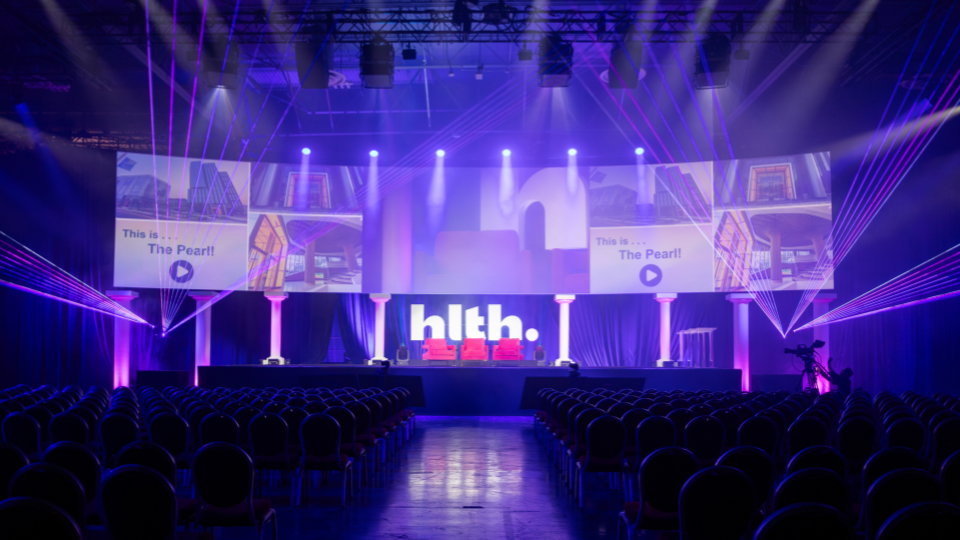
The Stage is the Biggest Message...
You can have an amazing keynote, beautiful venue, packed room, and an agenda your team spent half the year perfecting...but then the mic cuts out. The moment that happens, suddenly attendees are more focused on the technical difficulties than anything else.
For conferences, the stage is where your biggest messages, speakers, videos, announcements, and brand moments happen. That makes professional conference staging more than a nice backdrop.
It’s part of how the entire event comes together.
From audio and video to lighting, scenic design, presentation management, and show-day support, professional AV staging helps turn a room full of people into an actual experience.
Here are seven reasons it matters to have professional staging done by an AV team.
1. Everyone Can Actually Hear the Speaker
Kind of important. If people can’t hear, you don’t have an event.
Professional conference audio visual production starts with making sure every attendee can clearly hear what’s happening on stage.
That means choosing the right microphones, designing audio coverage for the room, mixing speakers properly, and having an audio engineer actively managing the system throughout the show.
Because “Can everyone hear me?” probably shouldn't be your keynote speaker's opening line.
2. Your Content Is Easy to See
Slides originally designed on a laptop don’t automatically work in a ballroom with 1,500 people on a 30 x 16 feet LED screen.
With a professional AV production team, you can rest easy knowing they’ll account for screen size, viewing distance, sightlines, projection brightness, LED placement, and presentation formatting so people in the back of the room can follow along too.
If you need binoculars to see the screen, we may have a problem.
3. The Stage Actually Looks Like Your Brand
A conference stage shouldn’t feel like someone rolled a podium into an empty ballroom five minutes before doors open.
Professional event staging combines scenic design, LED displays, lighting, graphics, and branded content to create an environment that actually feels like your company’s event.
4. Speakers Feel More Prepared
Walking onto a stage in front of hundreds or thousands of people is incredibly daunting. It’s already intimidating enough, so they shouldn’t have to worry about where their slides are.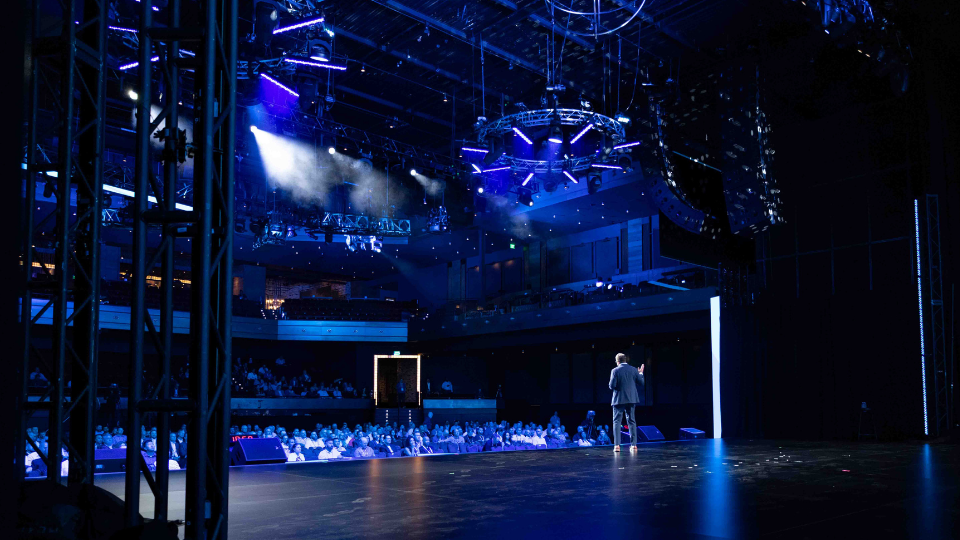
Good event production makes the technology feel invisible to the crowd, but keeps the speaker confident when looking at teleprompters or confidence monitors. That’s exactly how it should feel, seamless.
5. Every Cue Happens When It’s Supposed To
Nobody likes an event where music randomly cuts in while the speaker is getting to the good stuff. Every cue needs to happen at the right time or it takes away from the impact of the event. These are the cues we’re talking about:
-
Walk-up music
-
Lighting changes
-
Videos
-
Graphics
-
Presentation slides
-
Microphones
-
Camera shots
Those moments NEED to happen together. A professional live event production team coordinates the run of the show and technical cues so transitions feel intentional instead of looking like everyone backstage just discovered the agenda.
6. Problems Get Solved Before the Audience Notices
Live events are always changing and moving. A speaker arrives and brings a completely new deck with them. A laptop stops cooperating entirely. A microphone suddenly decides to retire early.
Professional AV teams plan for those moments with testing, tech rehearsals, backups, redundancy, and experienced technicians who can easily troubleshoot an issue.
The goal is making sure your attendees never know problems came up.
7. The Whole Conference Feels More Professional
Professional AV staging is more than renting a stage and a couple of speakers. Depending on the conference, it can include:
-
Audio systems and microphones
-
LED video walls and projection
-
Stage lighting
-
Scenic and stage design
-
Presentation management
-
Confidence monitors
-
Cameras and IMAG
-
Video playback
-
Show calling and cue management
-
Speaker rehearsals
-
Livestreaming and recording
-
Rigging
-
Technical crew
-
Backup systems and redundancy
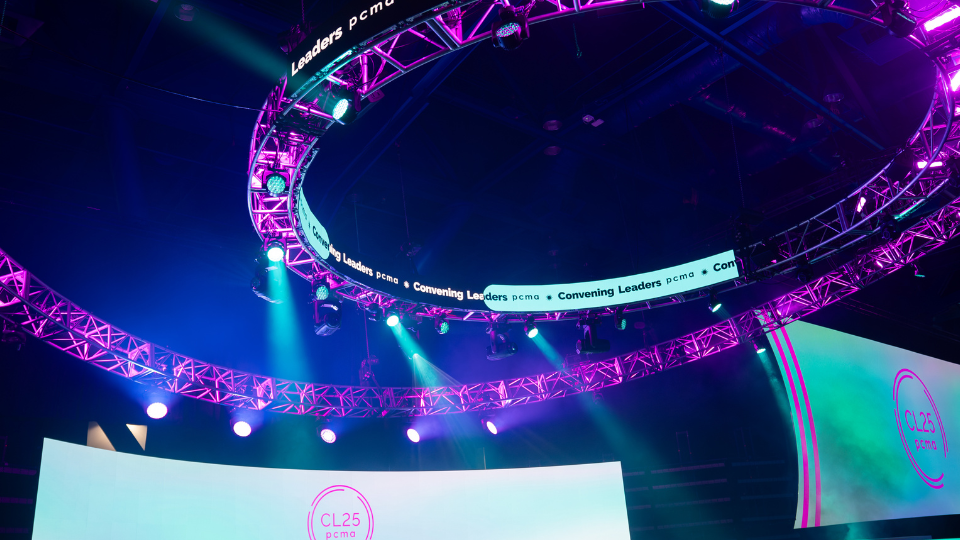 The important part is that those pieces are designed as one production system. Your lighting affects your camera, your stage design affects your screens, and your screens affect your content. Everything connects, which makes planning those pieces especially crucial for the success of your event.
What Should You Look for in a Conference AV Partner?
Equipment matters, but the people running it matter more. When comparing AV production partners, look beyond the equipment list. Ask how the approach:
-
Preproduction: Are they asking questions about your venue, audience, speakers, agenda, branding, content, and event goals?
-
Stage and AV design: Are they designing around the experience or just recommending equipment?
-
Speaker support: Will someone manage presentations, rehearsals, confidence monitors, and last-minute content changes?
-
Show-day execution: Who is actually calling cues and managing technicians during the conference?
-
Backup plans: What happens when something doesn’t go according to plan?
The answer to these questions shouldn’t be just:
“We’ll figure it out.”
It should be:
“Here’s the plan.”
How Clarity Experiences Handles Conference Staging
At Clarity Experiences, conference AV starts with the experience you’re trying to create. It’s not just a generic equipment list.
Because Clarity works across AV production, stage design and scenic, creative content, digital signage, and live event production, we bring together all the necessary pieces to create your dream event.
We’ll take care of the technical details before the event takes off. We want your team to focus on speakers, attendees, content, sponsors, and everything else already on your plate.
We’ll handle the part with all the cables.