
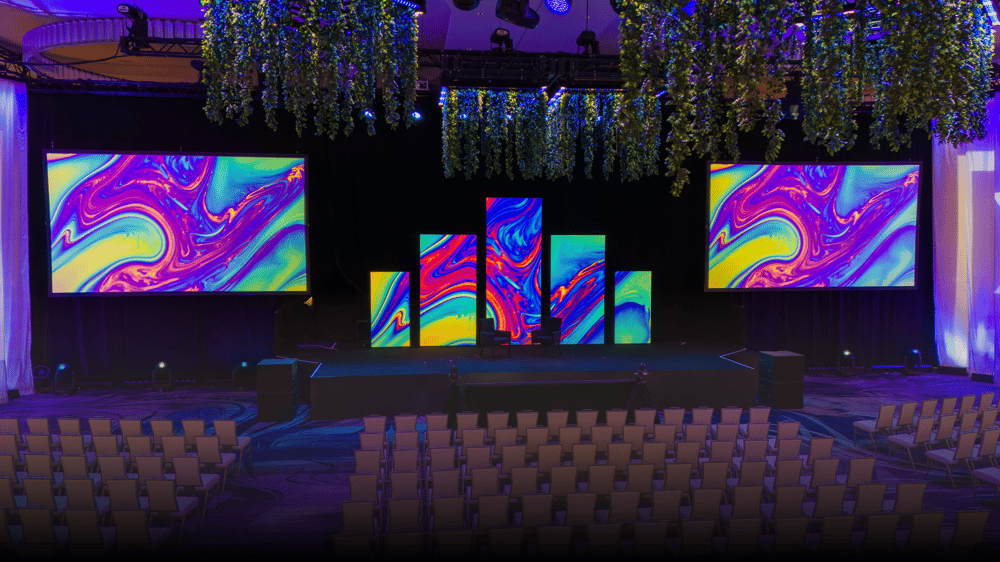
The Art of Meaningful Interactions
The technology at events isn’t changing how events are planned, it’s fully taking over how people experience them. From augmented reality that grabs attention to personalization that actually feels personal, event technology in 2026 is all about creating memories..
If you’re an event planner, marketer, or venue partner wanting to stay ahead, this guide breaks down the top 10 event technology trends for 2026 with practical insights that you can actually use.
What is Event Technology
Event technology is the digital tools and platforms used to plan, promote, manage, and enhance events. In the AV world, event technology would be the hardware, software, and systems used to deliver exceptional audio, video, lighting, staging, streaming, and interactive media at an event. We know that’s a mouthful, put simply, it’s the technology that allows people to see and hear.
This includes:
-
Professional sound reinforcement systems
-
Lighting control and automation
-
Video switching and broadcast platforms
-
Hybrid and virtual event production tools
-
Network infrastructure that uses AV-over-IP
AV event technology takes ideas and turns them into experiences.
How Event Technology Can Help Planners
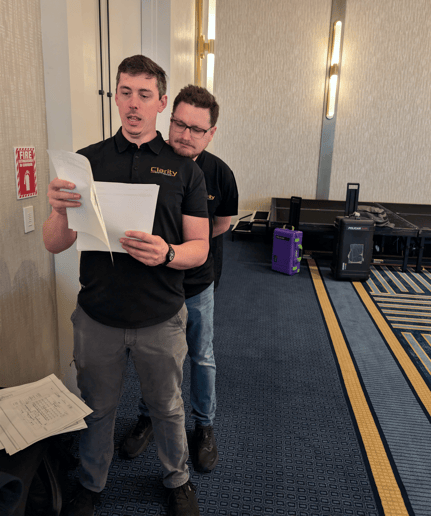 AV-focused event technology doesn’t just make the events look better, it makes them function better. Planners benefit from event technology in many ways, here’s a few:
- Clear communication: Crystal-clear audio and high-resolution visuals ensure messages land
- Stronger engagement: Dynamic lighting, video, and motion keep audiences focused
- Scalable production: One AV setup can serve in-room, livestream, and on-demand audiences
- Brand consistency: Telling the brand’s story reinforces brand identity across every touchpoint
- Operational reliability: Redundancy, monitoring, and automation reduce risk
AV is strategic, not secondary. Event technology in AV is central to delivering events that perform as well as they look. Below are the top ten trends in event technology for 2026.
Top 10 Trends in Event Technology for 2026
1. AI Assistants to Support AV
AI-driven chatbots and assistants are now doing the behind-the-scenes heavy lifting. They help attendees find sessions, rooms, and livestreams without panic-texting colleagues, while giving production teams real-time updates and coordination so the show keeps running smoothly.
2. Immersive Stages With Virtual & Augmented Reality Experience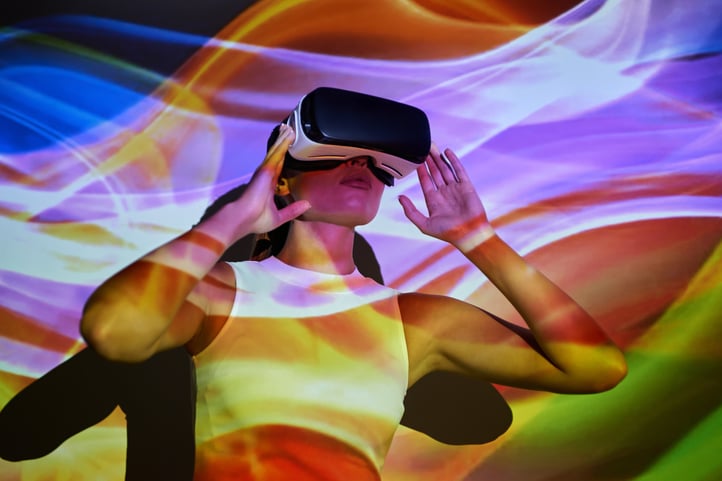
Virtual (VR) and augmented reality (AR) are becoming fully integrated into AV production rather than standing alone as novelty experiences. In 2026, these tools are being used to extend stage design, layer digital storytelling over live presentations, and create environments that respond dynamically to speakers and content.
From AR graphics that appear on LED walls to VR-powered previews of scenic concepts, this event technology allows planners and AV teams to push creative boundaries while maintaining precise technical control.
For AV teams, this event technology trend creates epic environments that blur the line between physical and digital production.
3. Get social: Integrating social media in event planning
Social media is increasingly designed into the AV experience itself. Live social feeds, branded hashtags, and curated user-generated content now appear on LED walls and displays throughout events.
This event technology extends the life of AV content beyond the room, amplifies reach, and encourages attendees to engage both onsite and online while still keeping the focus on the live experience.
4. Bring AV Plans to Life with Event Diagramming Tools
Event diagramming tools are now essential for AV success. These platforms allow teams to design detailed layouts that include lighting plots, speaker coverage, LED walls, cameras, and rigging points all before load-in begins.
This event technology enables early collaboration between planners, venues, and AV partners, reducing onsite guesswork and last-minute changes. The more detailed the diagram, the more confidently the production can be executed.
5. Mobile Event Apps That Sync With Live AV Moments
Mobile event apps are evolving into real-time engagement tools tightly connected to AV systems. Attendees use their devices to interact with content displayed on screens, participate in live polls, submit questions, and receive updates tied directly to what’s happening on stage.
By integrating apps into the AV workflow, this event technology creates two-way communication, turning audiences from passive viewers into active participants.
6. Hybrid Event Production That Feels Broadcast-Ready
Hybrid events are the norm for events and are here to stay. In 2026, AV teams are treating hybrid productions like live broadcasts–complete with camera direction, professional lighting, clean audio capture, and intentional pacing.
7. Facial recognition: Having a More Secure Experience
Facial recognition is becoming a powerful security-focused component of modern event technology, especially when integrated with AV and access control systems. In 2026, its primary value extends well beyond speed and convenience, helping planners create safer, more controlled event environments.
By verifying attendee identity in real time, facial recognition reduces badge sharing, credential fraud, and unauthorized access to secure areas such as backstage zones, production rooms, and VIP spaces. When connected to AV systems, this technology can automatically alert show teams if access rules are breached or if unexpected crowd movement occurs, allowing for faster response and better risk management. Used thoughtfully and transparently, facial recognition event technology supports a secure flow of people throughout the venue while minimizing friction.
8. Going green: Sustainability AV Solutions Are Here to Stay
Sustainability is shaping AV decisions at every level. In 2026, event technology supports greener production through energy-efficient displays, reusable scenic elements, and digital-first content delivery.
AV teams are also reducing waste by optimizing freight, minimizing printed materials, and designing systems that can be adapted across multiple events, proving that high production value and sustainability can coexist.
9. Intelligent Lighting Systems That Adapt in Real Time
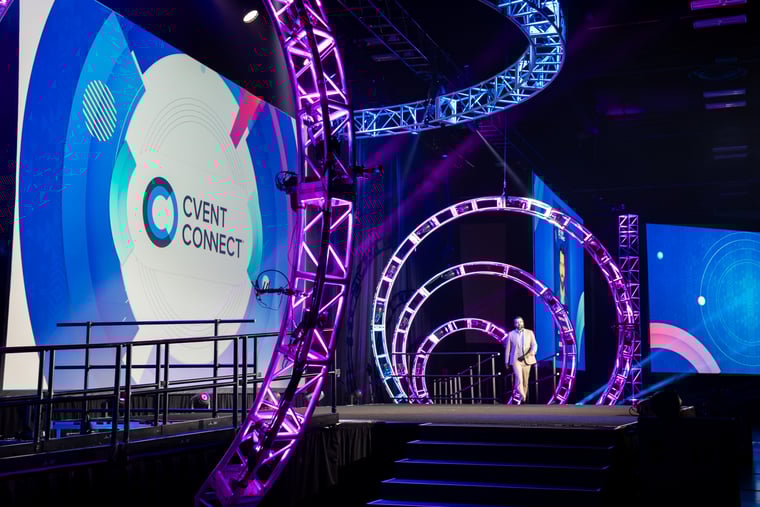
Lighting has become one of the most expressive elements of AV. Intelligent lighting systems now adapt automatically to speakers, content changes, and room conditions—enhancing focus, mood, and visibility.
This event technology allows lighting to support storytelling, reinforce branding, and improve camera performance, all while reducing manual adjustments during live shows.
10. AV-Optimized Networks as Core Event Infrastructure
None of today’s AV-driven event technology works without reliable connectivity. In 2026, dedicated networks support AV-over-IP, livestreaming, show control, and real-time monitoring.
Rather than being treated as background infrastructure, network design is now a foundational part of AV planning, ensuring performance, redundancy, and peace of mind throughout the event.
Why AV-Centered Event Technology Matters
As events get more complex, audiovisual technology has officially graduated from “nice to have” to “please don’t break,” becoming the backbone of the entire experience. The most successful events in 2026 will be those that plan AV early, integrate technology intentionally, and partner with teams who understand both creative vision and technical execution.
When event technology and AV strategy align, the result is seamless, engaging, and unforgettable.
Partner With Clarity for Your Next Event
Want to work with a company that is on top of all the 2026 trends and ahead of the game? Let’s chat. We’ve worked together with many clients to build an event experience that looks effortless, feels kick-ass, and performs flawlessly from start to finish.