
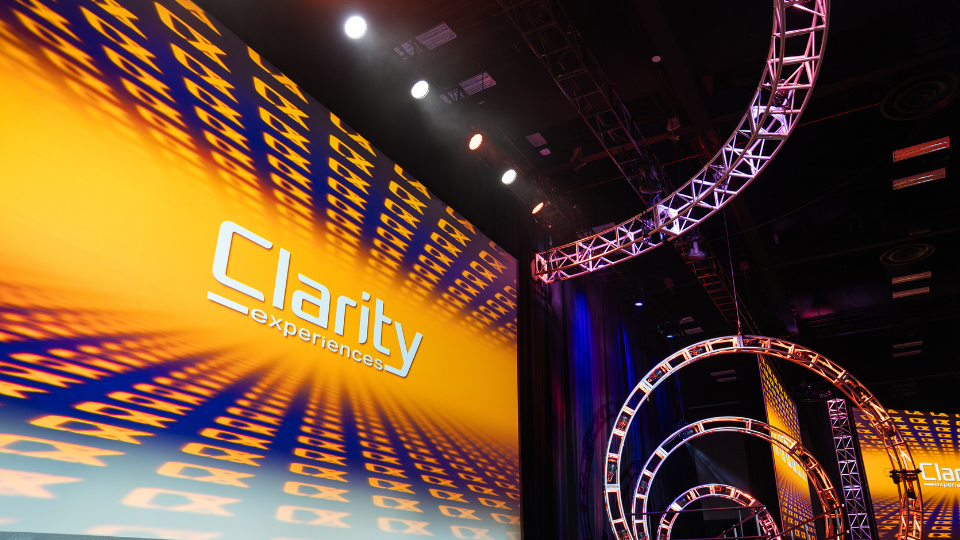
Think about the last conference you were at.
Do you remember the registration desk?
Probably not.
The generic looping logo animation?
Nope.
But you probably remember the massive interactive installation everyone was talking about. Whether it was the unexpected immersive entrance experience, the lounge that wasn't just a beer cart, or the keynote speaker that truly inspired you. That’s brand experience.
And creating one people actually remember takes more than putting your logo on everything you can find.
A memorable brand experience connects strategy, storytelling, event branding, environment, content, technology, and human interaction into one cohesive experience.
It may sound like a lot, but there’s a much easier place to start.
What Is a Brand Experience?
Brand experience is the impression someone walks away with after interacting with your brand. At live events, brand experience could include:
-
The invitation they received weeks before the event
-
The way the venue looks when they arrive
-
The stage and scenic design
-
A branded lounge
-
An interactive activation
Every one of these things are communicating a message. The question is whether they’re communicating the right message.
Great brand experience design makes those touchpoints all feel interconnected.
What Makes a Brand Experience Memorable?
You don’t necessarily need the biggest screen, wildest activation, or a 40-foot sculpture dangling from the ceiling to create a memorable experience.
You need an idea that people can actually relate to and understand. A story they can follow with an environment that feels intentional. AV production teams can make the whole thing feel effortless and turn your ideas into an experience that people still talk about even months later.
Because at the end of the day, people probably aren’t going to remember every slide of your PowerPoint or the lighting fixtures, they’re going to remember how the experience made them feel. Build around that.
But, how do you build a brand experience that’s memorable? Here are the top three tips on accomplishing that goal.
1. Start With What You Want People to Remember
Here’s where brand experiences sometimes go sideways. The planning meeting starts and someone says:
“We should have a giant LED wall.” or “What if we had an AI photo booth?”
Cool. Why?
Technology, scenic design, activations, lighting, and content are tools and are awesome. But, they shouldn’t be the strategy.
Before thinking about what you’re going to build, decide what attendees should walk away remembering. Ask:
“What should people understand about our brand?”
“How should they feel while they’re here?”
“What should they tell someone about this event tomorrow?”
“What should they want to do next?”
That becomes the foundation of your brand experience strategy. Maybe you want attendees to see your company as innovative. Or maybe you want your annual meeting to make employees feel genuinely connected to the organization. Or maybe you're just launching a product and want people to experience its biggest advantage firsthand.
Whatever it is, pick a clear idea and go with that.
If you try to communicate 17 things at once, people will likely forget all 17 of those things the moment they leave your booth.
2. Give People Something to Do
People remember experiences differently when they're part of them.
Watching is fine. Participating is better.
That’s one reason experiential marketing and interactive brand experiences can be so powerful at conferences, trade shows, product launches, and corporate events.
Instead of simply telling attendees what your brand does, let them experience something connected to it.
That could mean:
-
An interactive product demonstration
-
A touchscreen experience
-
A challenge or game
-
A personalized content experience
-
A social activation
-
An immersive environment
-
Live product customization
-
A hands-on demonstration
-
A collaborative installation
-
A branded hospitality experience
But here's the important part: The interaction needs to make sense and have intention.
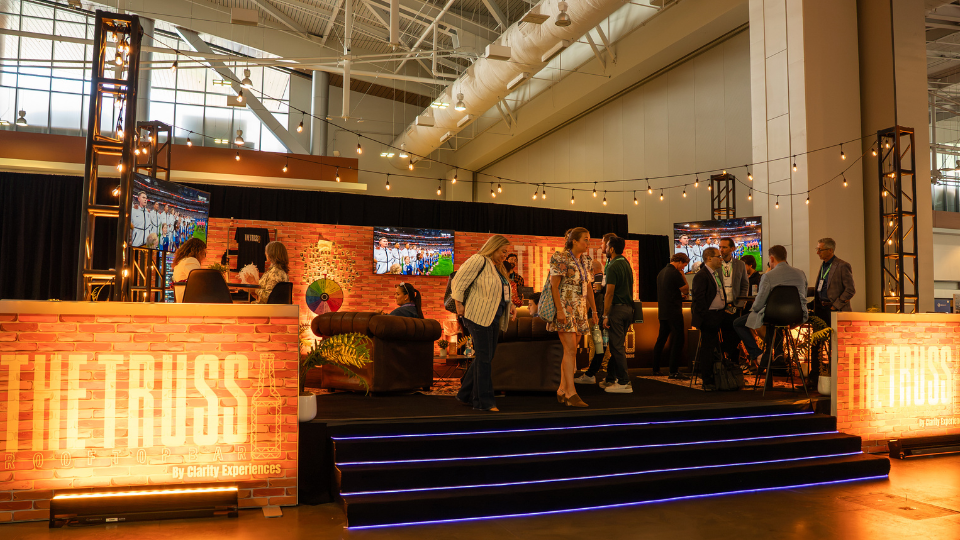
At Clarity, we’ve created tons of activations for us and our clients to achieve this goal. One example was from CventConnect 2026 in Nashville, TN where we designed a bar activation with inspiration from Broadway street in downtown. It was so successful that people on the streets of Nashville were asking where the Truss Bar was when they saw attendees and our team members wearing the shirts.
A random racing simulator might get a line of attendees to your booth. But if nobody understands why the racing simulator has anything to do with your cybersecurity company, congratulations.
A good brand activation connects the activity back to the brand, product, campaign, or story.
3. Use Technology to Support the Experience
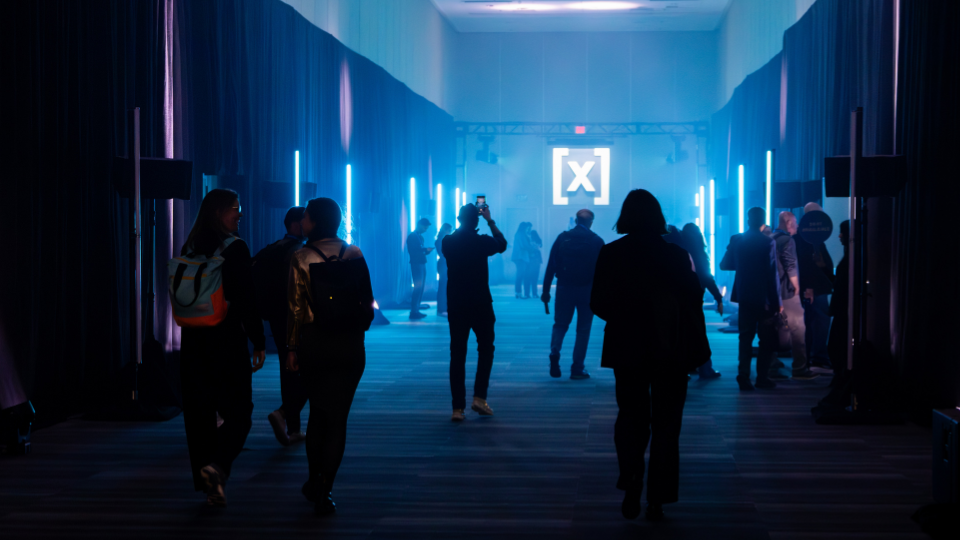 Of course we love technology...We’re an AV company.
It would be pretty weird if we didn't love technology. But technology earns its place when it makes the experience better.
-
LED video walls can turn a stage or exhibit into a massive branded environment.
-
Interactive touchscreens let attendees explore content freely on their own terms.
-
Projection mapping can transform physical surfaces into a fully immersive experience.
-
Digital signage can change throughout the day to drive the message of your branding.
-
Lighting can completely shift the feeling of a room.
-
Audio can make an experience intimate, energetic, dramatic, or unfortunately impossible to understand if it isn't designed correctly.
The best technology almost disappears into the experience.
People aren't thinking:
“Wow, I wonder what pixel pitch that LED wall is.”
Well...Most people aren't unless you’re in AV.
They're thinking about what they're seeing and how it makes them feel.
How Clarity Experiences and Orange Label Creative Build Brand Experiences Together
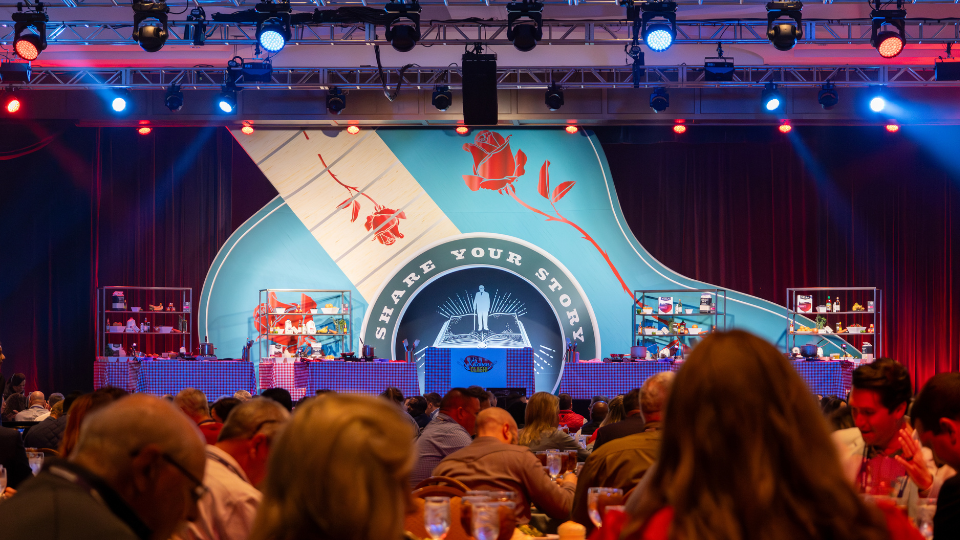 This is where Clarity Experiences and Orange Label Creative work slightly differently.
Orange Label Creative helps shape the creative side of the experience. That can include the big idea, theme, storytelling, event branding, environmental concepts, presentation creative, motion graphics, keynote content, activations, and the overall attendee journey.
Then Clarity helps turn that creative vision into something people can actually walk into. That includes AV production, LED, audio, lighting, stage design, scenic elements, digital signage, interactive technology, technical planning, installation, rehearsals, and show-site execution.
The important part? Those teams aren't meeting each other for the first time during load-in. Creative and production can work together from the beginning.
That means a stage can be designed knowing what the LED content needs to do while the branded environment is developed around the actual venue.
A And the big idea doesn't slowly get watered down as it moves from agency to production company to fabricator to AV team.
It's one connected process.
Orange Label Creative helps define what the experience should be. Clarity Experiences helps determine how to make it real.
Together, the goal is an event that just works the moment the doors open.