
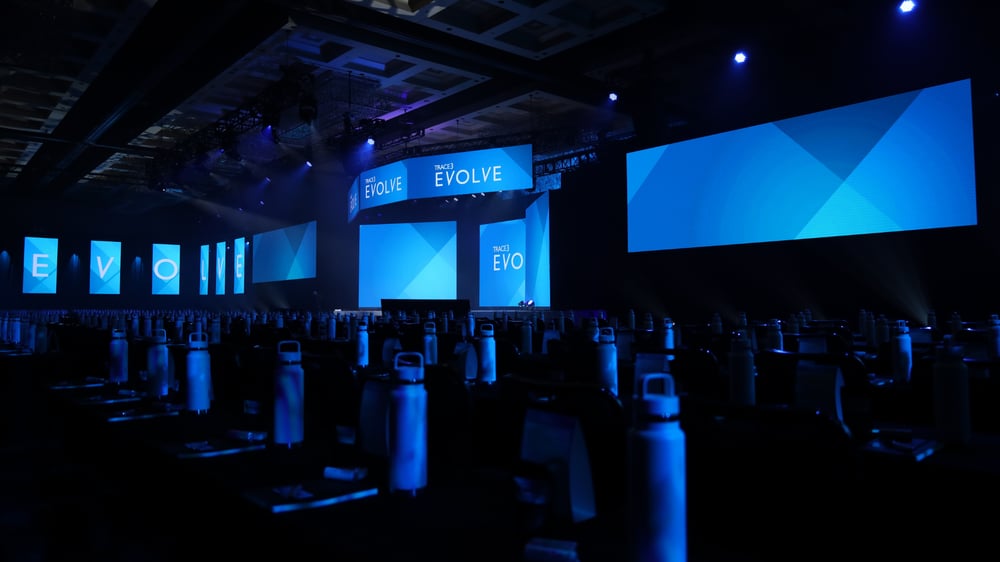
People remember what they can see and hear...
An event production company turns an event plan into something people can actually see, hear, feel, and remember. It designs the technical and creative experience, builds the production plan, supplies and manages the right people and equipment, runs rehearsals, calls the show, solves problems in real time, and wraps everything up after the final cue.
Short version: your event planner keeps the entire event moving. The AV production team makes the show work.
And yes, there will be cables...lots of them.
What Exactly is an Event Production Company?
An event production company, or AV production company, is the team responsible for translating your event goals into a complete live experience. They make sure your audience has clear sound, bright screens, a kickass stage, sharp content, and smooth transitions.
A full-service production company manages both the creative and technical sides of an event. Which includes:
-
Audio, video, lighting, and rigging
-
Stage design and scenic production
-
Technical design and engineering
-
Show flow development and show calling
-
Speaker rehearsals and presentation management
-
Creative content and event graphics
-
Live streaming and remote presenters
-
Event recording and post-production
-
Digital signage and attendee communications
-
Production staffing, logistics, and venue coordination
-
Backup systems and contingency planning
The equipment matters of course, but you need a team of experts that knows how to run the equipment.
Event production company vs. event planner vs. AV rental company
These roles work together, but they are not interchangeable.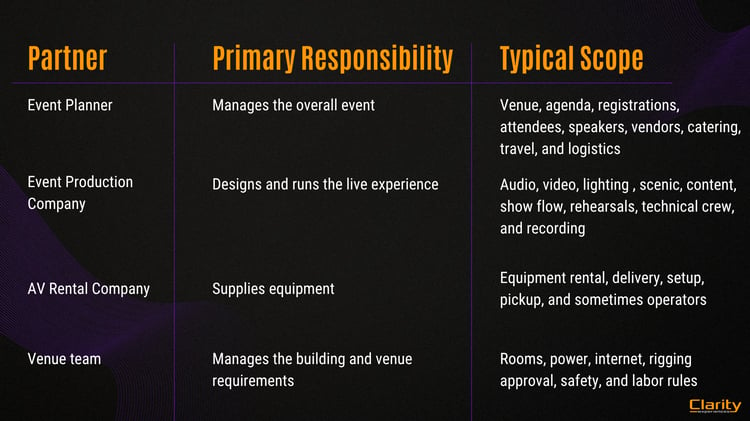
There’s some overlap but the difference is ownership. An AV rental company may deliver the gear, but an event production company helps determine what the show actually needs.
What does an event production company do before the event?
Most of the work happens before anyone walks into the ballroom.
Great production looks effortless because the team did the hard thinking early. Here is what that usually includes.
-
Understand the purpose: Before recommending screens or speakers, the team needs to understand the event. Who’s attending? What should they feel? What has worked before?
-
Design the technical and creative experience: Once the goals are clear, the production team develops the solution.
-
Build the scope and budget: The production company turns the concept into a detailed scope covering equipment, labor, design, engineering, travel, freight, venue requirements, rehearsals, streaming, recording, and post-event deliverables.
-
Create the production plan: The production plan is where all the moving parts start behaving like one show.
-
Coordinate speakers and content: Presentations, videos, walk-in loops, music, graphics, lower thirds, sponsor assets, and remote feeds all need to arrive in the correct format and make it to the correct screen at the correct time. That is why presentation management and creative content should be part of the production conversation early.
-
Plan for the unexpected: Live events change, good technical event production includes backup plans for the moments with the highest risk.
What does the production company do onsite?
Onsite, the plan becomes physical.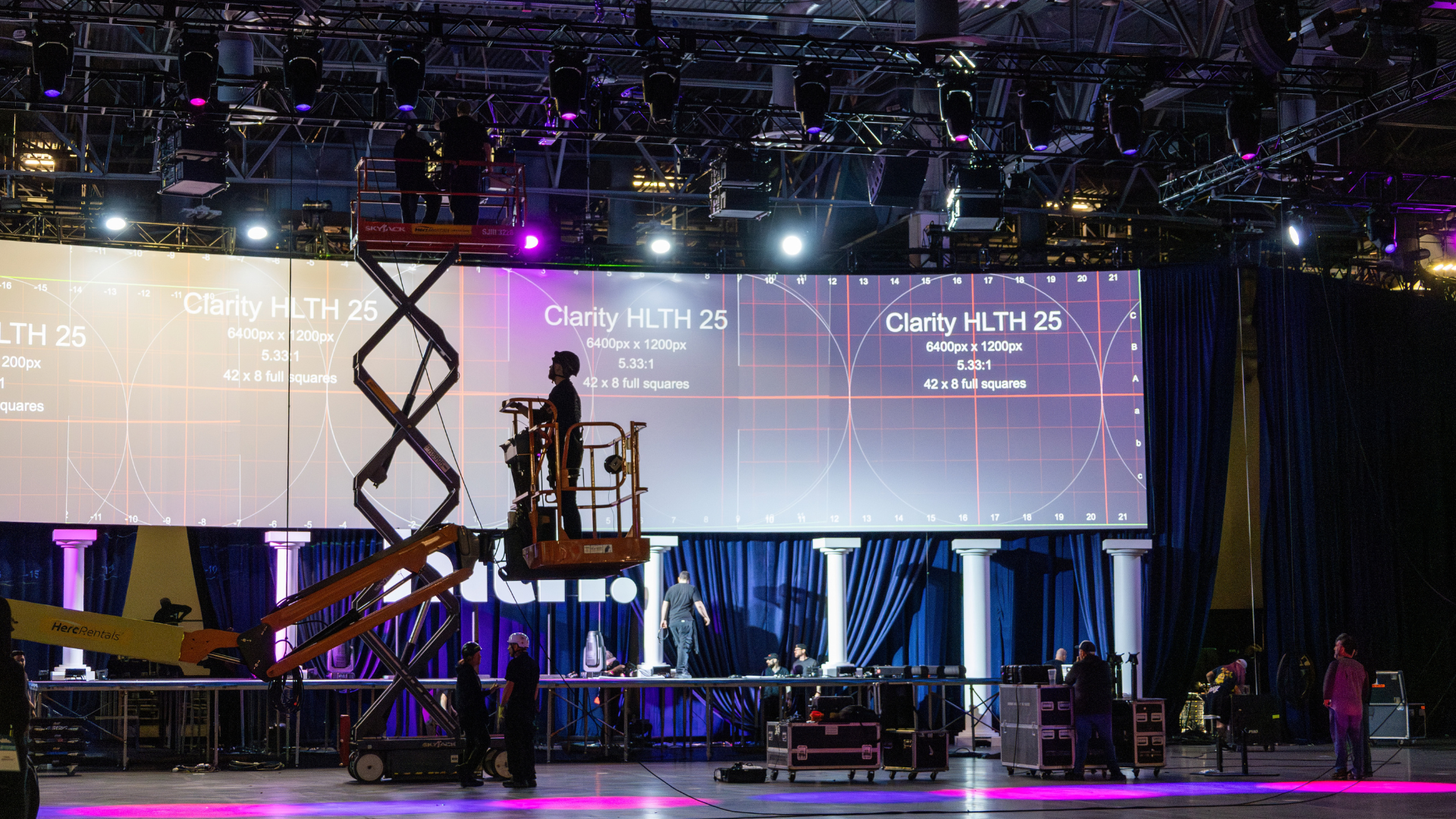
-
Load-in and setup: The crew unloads equipment, builds the stage, installs scenic elements, hangs lighting, places screens, runs cable, configures audio systems, sets cameras, tests playback, and checks every signal path.
-
Technical checks and rehearsals: Before the audience arrives, the production team tests the full system and rehearses the show.
-
Show calling and live operation: During the event, the show caller or producer cues every major moment. “Stand by video. Stand by lights. Stand by walk-up music. Go.”
-
Real-time problem solving: Even the best plan will meet reality eventually. An experienced team will adjust without letting the audience see the scramble.
What happens after the event?
The final applause isn’t always the final deliverable. After the show, the production company may manage:
-
Equipment strike
-
Freight and equipment returns
-
Recorded-file organization and delivery
-
Video editing and highlight reels
-
Session recordings and on-demand content
-
Caption files and transcripts
-
Post-event content packages
-
Final billing and reconciliation
-
Team debriefs and recommendations for the next event
If the event was recorded, the production can keep creating value long after the room empties. Keynotes can become on-demand sessions, while interviews can become social clips.
Who works on an event production crew?
Crew size depends on the scale and complexity of the event, but common roles include: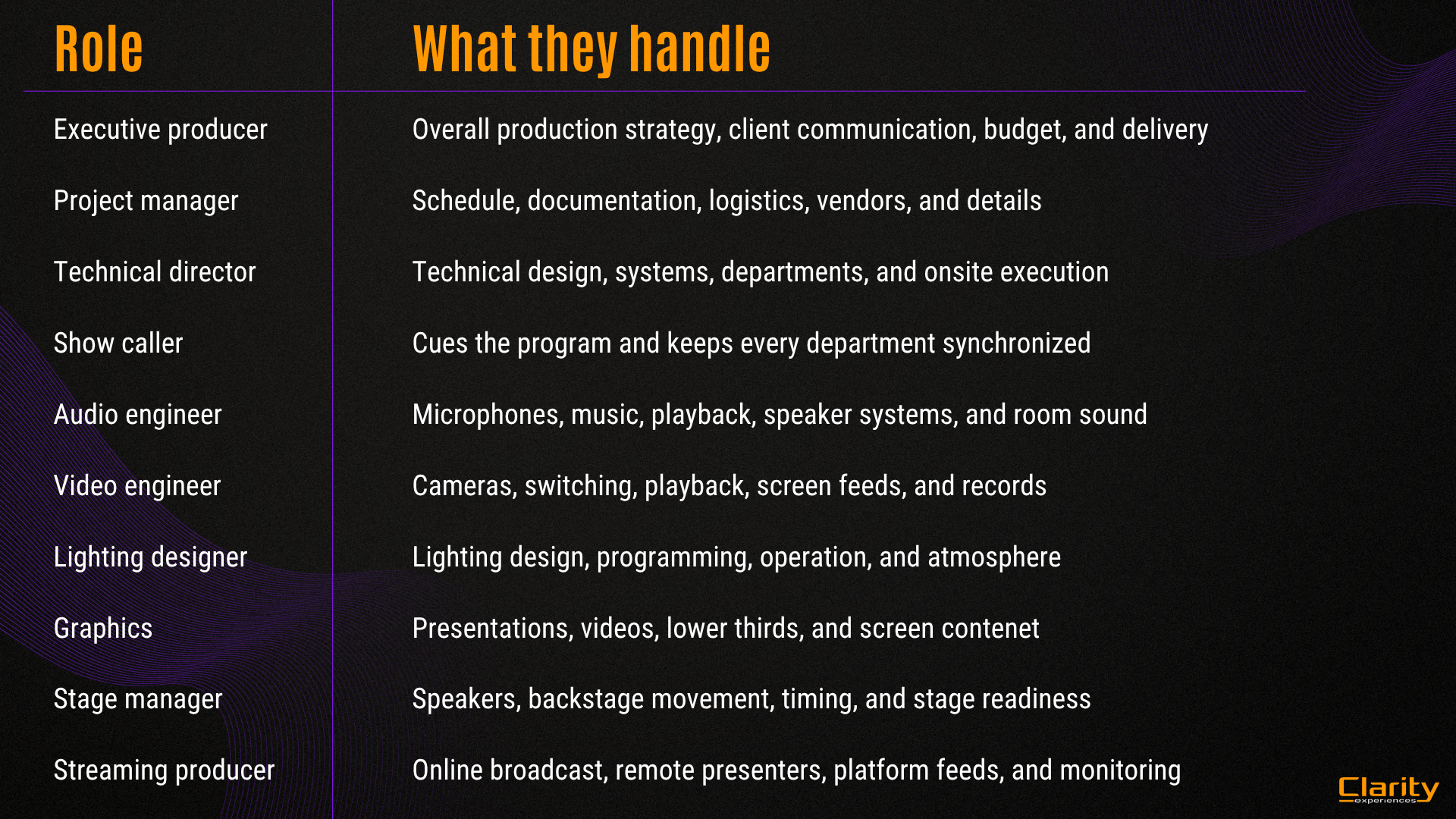
One person may cover multiple roles on a smaller program. A large conference may have full departments for each one. The important part is knowing who owns what before the room goes dark.
How do you choose the right event production company?
Start with the people and process, not the equipment list. A strong production partner should:
-
Ask about the event’s purpose and audience
-
Explain its recommendations in plain language
-
Introduce the people who will actually lead the project
-
Build a detailed and transparent scope
-
Identify assumptions, exclusions, and risks
-
Coordinate with the venue and other partners
-
Provide relevant work examples and references
-
Document decisions and changes
-
Plan realistic redundancies
-
Stay calm when the plan changes, because it will
Before requesting detailed proposals from a long list of companies, interview a focused shortlist. Then ask the best two teams to price the same event scenario. Our guide to selecting an AV production partner explains the full process.
What does Clarity bring to event production?
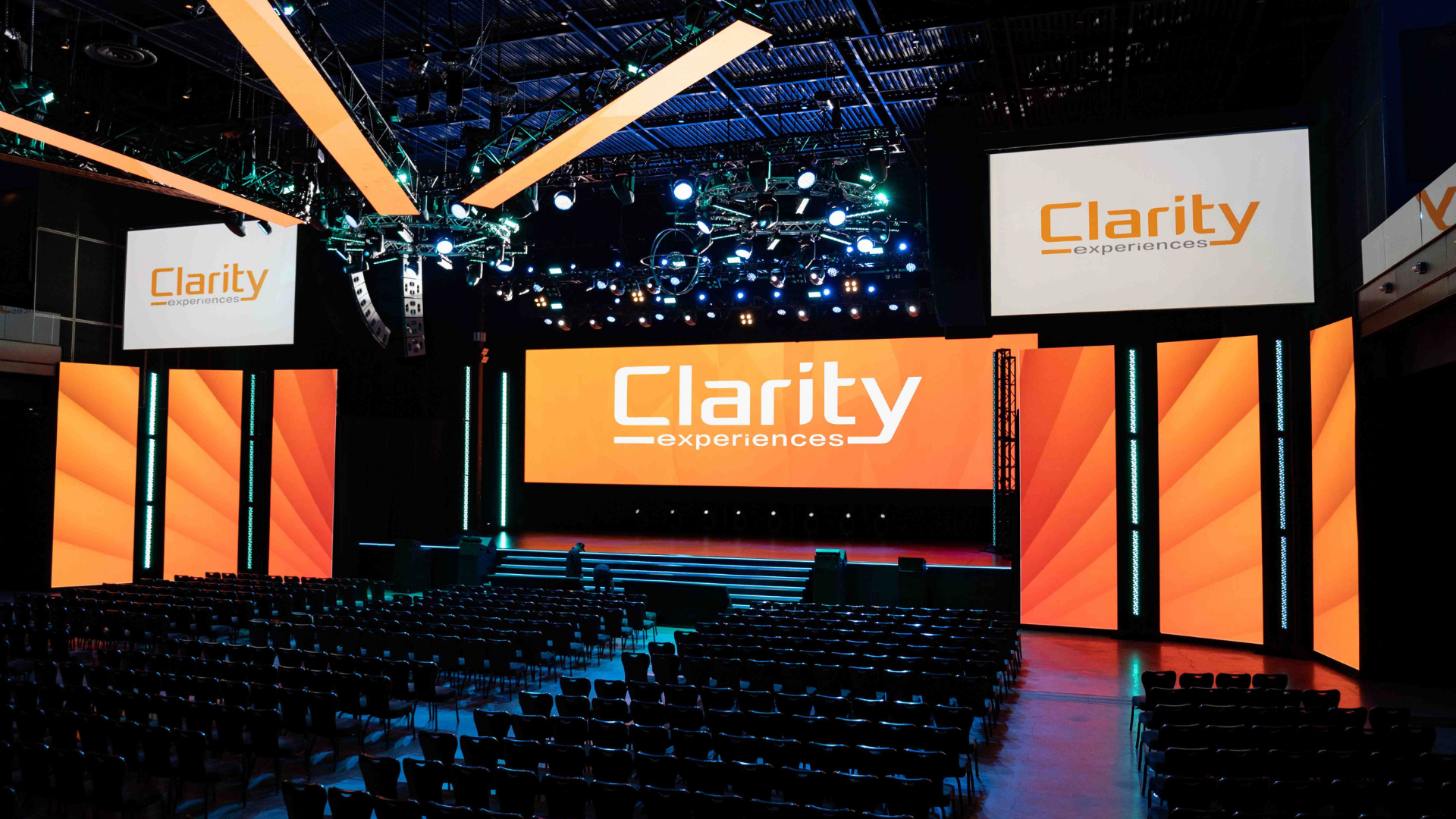 At Clarity Experiences, we build events around four things: purpose, production value, people, and partnership. That means we start by understanding what your event needs to accomplish. Then we bring the technical expertise, creative thinking, detailed planning, and experienced people required to make it happen.
You focus on the audience. We’ll handle the cues, cables, rehearsals, backups, and all the tiny details that suddenly become very large when the doors open.
Ready to build an event people will actually remember? Let’s talk production.