
What is Drayage? A No-Stress Guide to Trade Show Shipping and Costs
You’ve got the booth design, LED content, demo stations, and enough branded swag to outfit a small town. Now all of it has to reach your booth. Unfortunately, freight has not learned to teleport.
That’s where drayage comes in.
Drayage is one of those trade show terms that can appear in an exhibitor manual with almost no explanation and then appear on an invoice with plenty of numbers. It is also one of the most common sources of budget confusion for exhibitors.
So, what is drayage, what are you actually paying for, and how can you keep it from becoming a last-minute surprise?
What is Drayage?
Drayage is the short-distance movement of freight. At a trade show, it usually means unloading your exhibit materials, moving them to your booth, storing the empty crates during the event, bringing those crates back after the show, and moving everything to the loading dock for pickup.
Here’s the easiest way to remember it: shipping gets your freight to the convention center or advance warehouse. Drayage services get it from the dock to your booth and then back out again.
Same crates, two different services, and usually two different charges (fun).
Drayage in Logistics vs. Drayage at a Trade Show
In the larger logistics world, drayage usually means moving freight a short distance between places like a port, rail yard, warehouse, or distribution center. It is the short hop inside a much longer shipping journey.
At a trade show, the idea is basically the same, except your freight is headed to a booth instead of a warehouse. You will also hear drayage called material handling. On the show floor, those terms usually mean the same thing.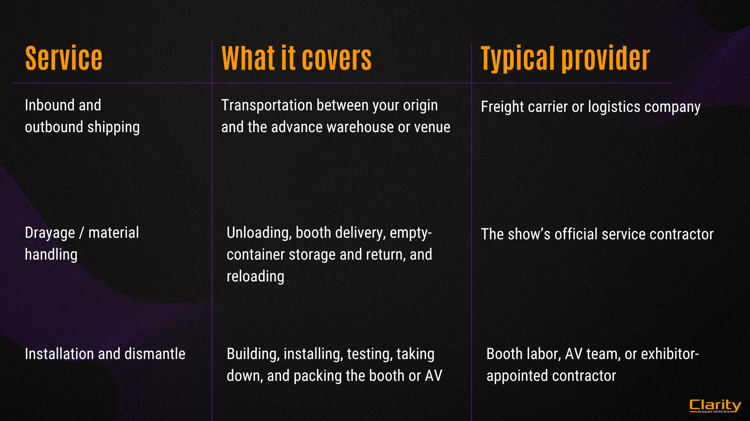
How Does Trade Show Drayage Work?
The details change from show to show, but the basic process usually looks like this:
1. Choose where the freight is going.
You may ship to an advance warehouse or send everything directly to the venue. The exhibitor manual will give you the addresses, labels, deadlines, target times, and all the other details nobody wants to hunt for on move-in day.
2. The show contractor receives it.
When the truck arrives, the official material-handling team unloads the shipment and checks it into the show system. Your carrier does not simply cruise onto the exhibit floor and park beside your booth.
3. Your freight heads to the booth.
The crates, pallets, road cases, and cartons move from the receiving area to your exhibit space. Now the build can actually begin.
4. The empty containers disappear for a while.
After you unpack, the team removes and stores your labeled empty crates and cartons. Because nothing completes a beautiful booth quite like a mountain of cardboard in the corner.
5. Then the whole thing runs backward.
After the show, the empty containers come back. You repack, finish the outbound paperwork, and the drayage team moves everything to the dock for carrier pickup.
What Does Trade Show Drayage Include?
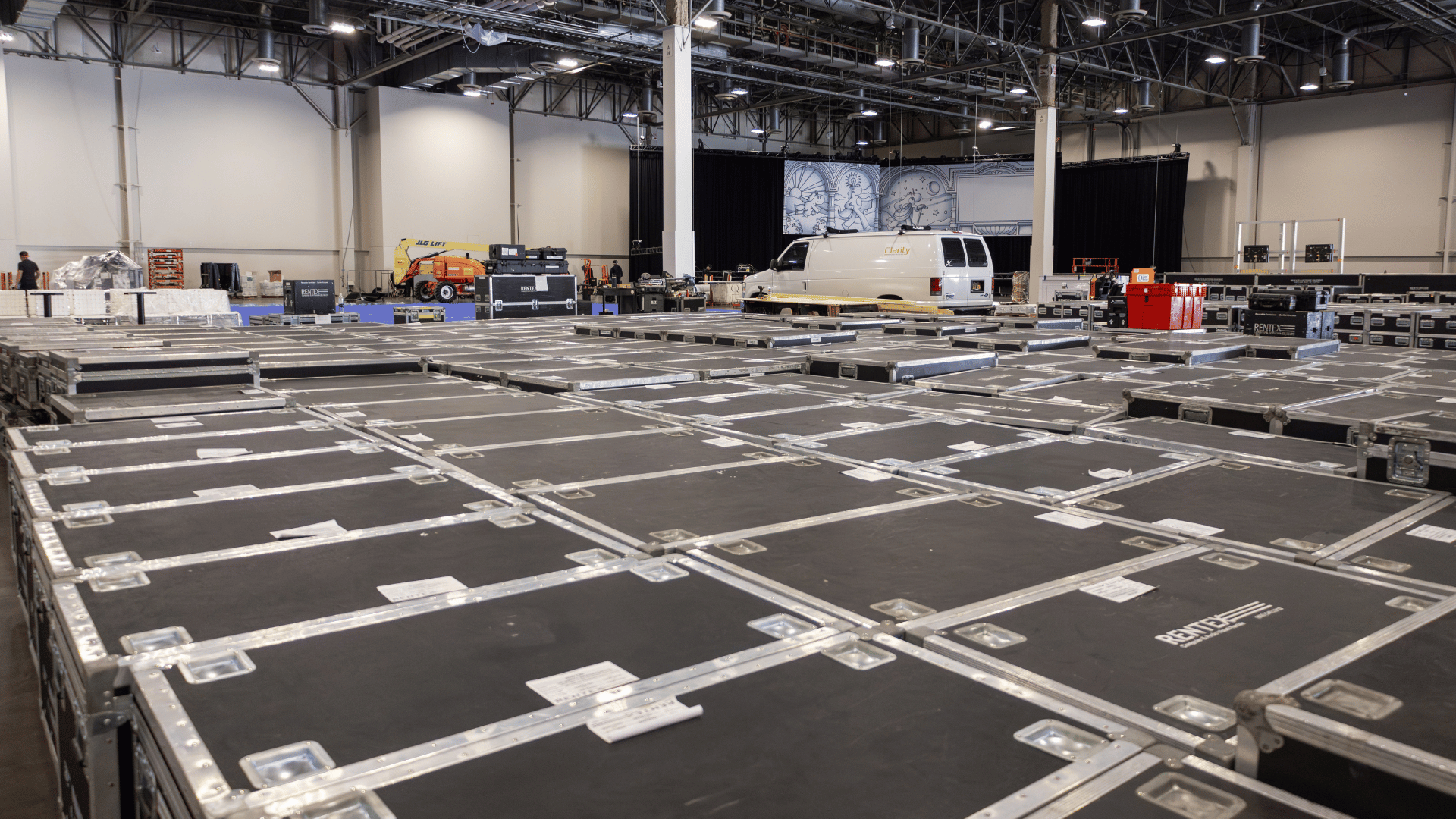
So, what are you actually buying? Drayage usually covers:
-
Receiving your freight at the advance warehouse or show-site loading dock
-
Unloading crates, pallets, cartons, and equipment from the carrier
-
Moving those materials to your booth
-
Removing and storing labeled empty containers during the show
-
Returning the empty containers after the exhibit hall closes
-
Moving repacked materials back to the dock
-
Reloading the freight onto your outbound carrier
What does it not cover? Usually, pretty much everything else. Long-haul shipping, booth installation, AV rentals, electrical service, rigging, internet, customs, and specialty labor can all show up as separate line items.
Every show does things a little differently, so the exhibitor manual and show-specific rate sheet are your best friends here. Maybe not fun friends. But very useful friends.
Who Handles Drayage at a Trade Show?
Trade show drayage is usually handled by one official general service contractor chosen by show management. That team controls the loading dock, forklifts, floor access, empty-crate storage, and the freight traffic moving in and out.
In other words, this part is not really a choose-your-own-adventure situation. Your freight carrier delivers to the warehouse or loading dock. The official contractor takes it from there.
Your booth builder or AV partner can help coordinate timing, equipment, and paperwork, but they are not automatically the drayage provider. Get everyone talking early so no one is standing beside a crate saying, “Wait, who owns this part?”
How Are Drayage Costs Calculated?
Now for everyone’s favorite topic: the invoice.
Drayage is often priced by weight in 100-pound units called hundredweight. Most shows also have a minimum charge for each shipment, even when the shipment weighs less than that minimum. Exact rates vary, because of course they do.
Your total can change based on:
-
Total shipment weight and the contractor’s minimum billable weight
-
Whether the freight goes to an advance warehouse or directly to show site
-
The day and time it arrives, including straight-time, overtime, weekend, or holiday windows
-
How the freight is packed and whether it requires special handling
-
The number of separate shipments you send
-
Whether the shipment arrives outside its assigned target window
Outbound delays, incomplete paperwork, or a carrier that misses the pickup deadline
This is how a small box of brochures can suddenly start acting like it flew first class. If every delivery hits a minimum charge, six separate cartons may cost a lot more than one organized pallet. The math gets spicy pretty quickly.
So, What Does Drayage Actually Cost?
For rough budgeting, plan on about $100 to $250 per 100 pounds for standard material handling at many U.S. trade shows. Most shows also use a 100- or 200-pound minimum, so this is a planning range—not a quote. Your actual rate sheet may land below it, above it, or introduce a surcharge you did not know existed until five minutes ago.
Using that range, a 500-pound pallet could cost roughly $500 to $1,250 for basic drayage before overtime, weekend, late-arrival, or special-handling fees. A 50-pound box may still be billed at the minimum and cost around $100 to $500. Yes, the tiny box can be the expensive one.
Why Is Trade Show Drayage So Expensive?
Because you are not really paying for the 300 feet between the loading dock and your booth. You are paying for the whole operation around that move.
That can include scheduled dock access, unloading equipment, experienced crews, traffic control, storage, empty-crate management, floor safety, and the controlled chaos of getting an entire exhibit hall built in a very short window.
Still not the most exciting bill you will ever pay. But it makes a little more sense than “someone drove my crate across the building.”
The best move is to give drayage its own budget line from day one. If you are building the full exhibit budget, our guide to how much a trade show booth costs can help you account for the other major budget categories too.
8 Ways to Reduce Drayage Costs and Avoid Surprises
1. Open the exhibitor manual.
Yes, actually open it. Find the official contractor, rates, warehouse deadline, direct-to-show schedule, target move-in time, labels, and outbound rules before you book the truck.
2. Know what you are shipping.
List the booth pieces, AV cases, samples, literature, giveaways, hardware, and that mysterious last-minute box someone will absolutely try to add. Then get accurate weights.
3. Consolidate the small stuff.
Fewer shipments can mean fewer minimum charges and fewer tracking numbers to lose. One organized pallet usually beats a parade of loose boxes arriving on different days.
4. Pack like you want it handled quickly.
Use sturdy crates, road cases, or pallets. Secure everything, remove old labels, and add the show labels exactly where requested. Loose or mixed freight can lead to special-handling fees.
5. Compare advance warehouse and direct-to-show options.
The advance warehouse can offer a wider delivery window and earlier booth placement. Direct delivery may skip the warehouse but demand much tighter timing. Look at the full price and schedule, not one attractive number on the form.
6. Do not freestyle the delivery schedule.
Late, off-target, weekend, or overtime arrivals can add fees. Use a carrier that understands trade shows and give the driver every address, target time, marshaling instruction, contact, and document before they roll out.
7. Get the booth, AV, and freight teams talking.
Decide what has to ship, what can be sourced locally, what needs a special case, and what must land first. A smart trade show booth design plan starts thinking about the loading dock long before the show floor opens.
8. Plan load-out before the show opens.
Confirm the return carrier, pickup window, labels, and Material Handling Agreement before the event ends. Future you will be very happy when teardown does not become chaos with forklifts.
Don’t Let Drayage Become the Plot Twist
The short version? Shipping gets your freight to the show. Drayage gets it to the booth.
Planning a trade show booth and already feeling the moving parts multiply? We’ve got you covered. Explore Clarity’s Trade Show AV services or talk with our team about creating a booth that looks amazing, works smoothly, and is actually ready when attendees walk in.