
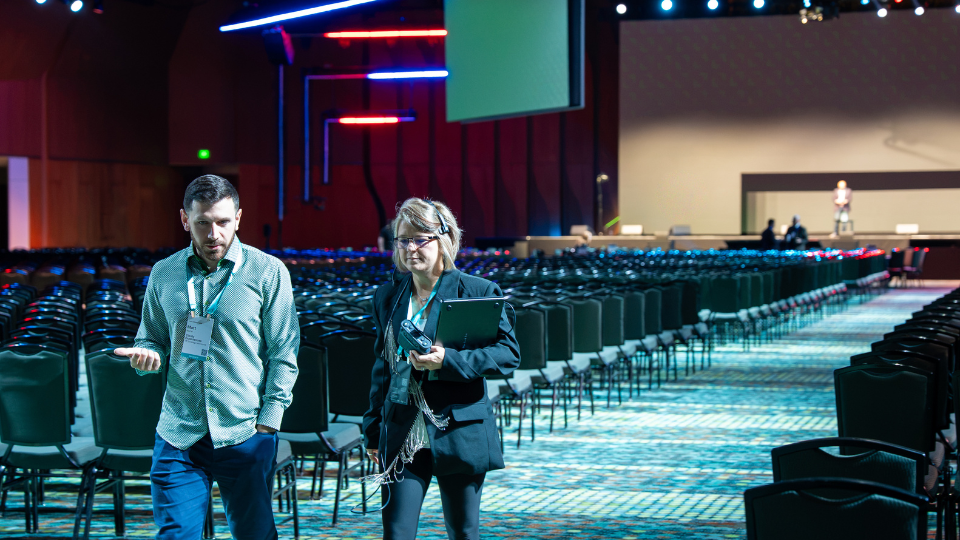
Planning a trade show...
When people are talking about AV, they’re talking about the incredibly massive screens and soundsystems.
LED walls, speakers, lighting rigs, cameras, or stages. All the gear that makes an event look expensive in a good way. But here’s the thing, the gear does not run itself.
A microphone does not spontaneously know when the CEO is walking on stage. The people behind your event production are what keep things moving smoothly.
Why AV Roles Matter in Event Production
AV is huge for live event production. But AV is more than audio, video, lighting, staging, and livestream equipment.
It’s the people that make the biggest impact. At Clarity Experiences, we focus on having the right production team to help your event feel smooth, calm, and professional. High-impact production roles are often the difference between reactive and proactive execution, stressful and confident presenters, slow and efficient rehearsals, and generic staffing versus integrated team support.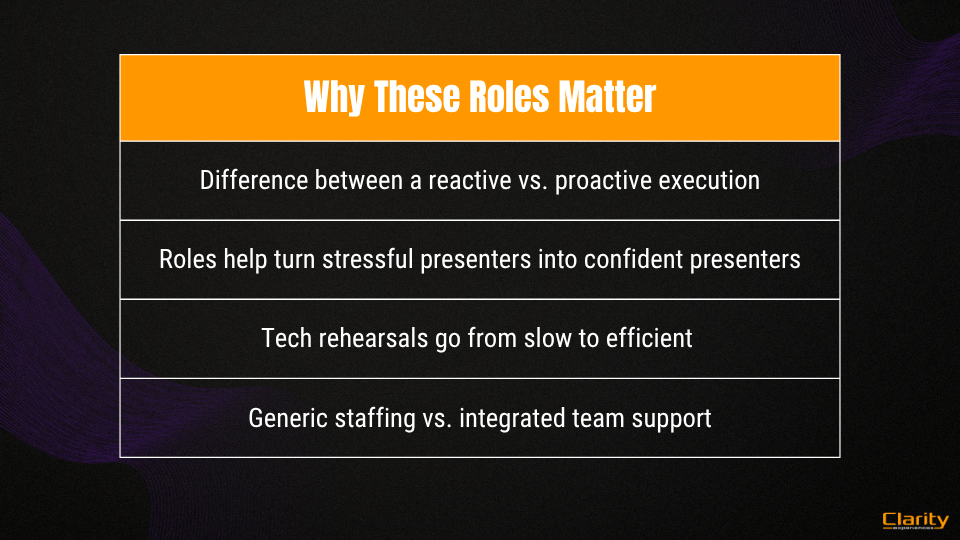
Basically, these roles help everyone breathe a little easier.
So, What Roles Do You Need For A Successful AV Experience?
The idea of a successful AV experience may seem subjective to some, but Clarity turns that to an objective experience. We make events feel epic and immersive. To do so, we have an incredible array of AV roles that work cohesively together to create a successful event experience. But, what are those roles?
Executive Producer: The Alignment Person
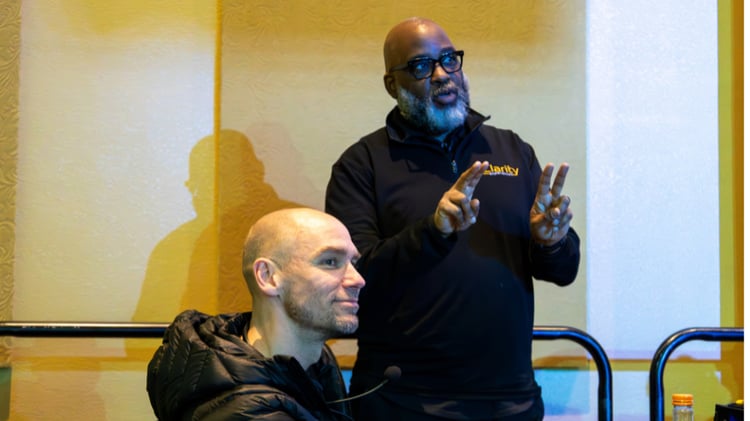 The Executive Producer is one of the most important AV roles in event production. Their job is to connect the dots between the client, sales team, producer, creative team, and onsite crew. They help make sure everyone understands the event scope, goals, budget, schedule, and client expectations.
Think of the Executive Producer as the person making sure nobody is living in their own little event world.
They help with communication, planning, scope changes, show flow, production schedules, creative milestones, rehearsals, and client confidence.
If this role is missing, things can get messy fast where communication breaks down, updates get lost, and the client starts asking questions nobody is ready for. Suddenly everyone is very interested in “circling back.”
Producer: The Overall Production Lead
The Producer owns the big picture of the production.
They manage the technical elements, logistics, crew flow, and major production areas. This can include scenic, staging, lighting, audio, environmental elements, loading dock schedules, security details, and vendor logistics. In simple terms, they are the person making sure the production machine actually works.
A strong Producer knows how to balance creative ideas with real-world execution. Because yes, a floating stage entrance with lasers and fog sounds awesome. But somebody has to figure out how to build it safely, power it, staff it, rehearse it, and make sure it doesn’t ruin the keynote.
Show Caller: The Cue Master
The Show Caller runs the live show from the cue sheet.
They call when music starts, lights change, slides advance, videos roll, cameras switch, and when someone walks on stage. They are basically the air traffic controller of your event production.
The role is massive. The show caller owns the show flow, cue sheet, and live show delivery while working closely with the producer, executive producer, content producer, and the rest of the crew.
Without a strong Show Caller, your event can feel clunky. Awkward pauses happen. Transitions drag. Speakers walk out too early. Videos roll late. The whole thing starts to feel like a group project where no one opened the shared doc.
Graphics Operator: The Visuals Person
The Graphics Operator runs the presentation and visual content during the show.
They handle slides, lower thirds, media playback, sponsor graphics, videos, and screen content. They also will use dual machine redundancy, which means there is a backup system ready in case something goes wrong.
Because in live event production, “it should work” is not an option. A great Graphics Operator keeps the screens clean, accurate, and on cue. If the wrong slide appears during a keynote, people notice. If a video fails to play, people really notice.
Teleprompter Operator: The Speaker Safety Net
The Teleprompter Operator supports speakers who use scripts, notes, or prepared remarks.
They control the pacing of the prompter so presenters can speak naturally. Not too fast. Not too slow. This role is especially important for executive presentations, awards shows, fundraising events, corporate meetings, and high-visibility programs.
A good Teleprompter Operator helps speakers feel confident. A bad setup can make them look uncomfortable fast. And presenter confidence is everything. When speakers feel good, the audience feels it too.
Stage Manager or Deck Manager: The Backstage Boss
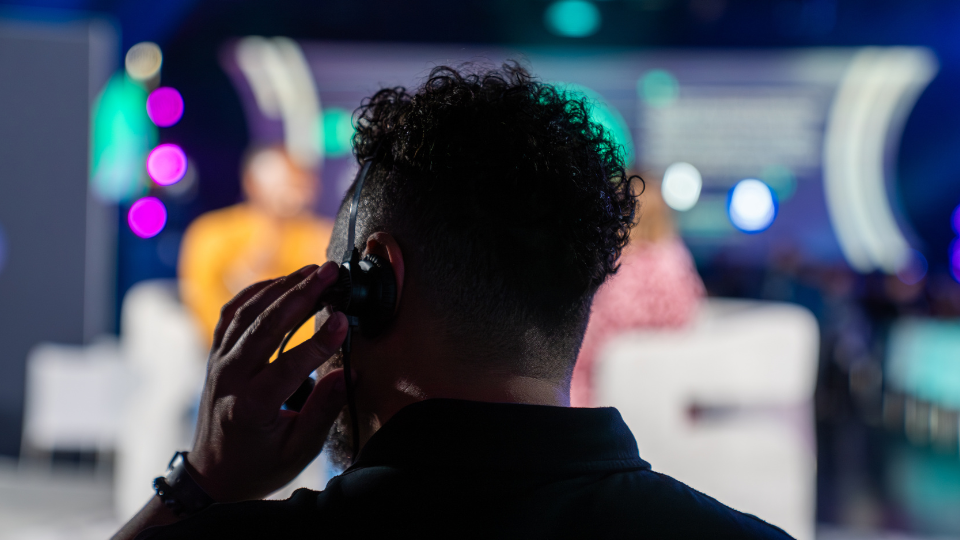 The Stage Manager, sometimes called the Deck Manager, owns what happens near the stage.
They help manage presenter entrances, exits, stage movement, green room flow, backstage timing, and stagehand direction. They also work closely with the Show Caller, Producer, and Executive Producer.
This role essentially makes sure people are in the right place before they need to be there. Sounds simple, but definitely is far from it.
Speakers wander. Panelists disappear. Someone always needs water. Someone else suddenly wants to change their walk-on music. The Stage Manager handles the human side of the show, which is usually the least predictable part.
Stage Manager or Deck Manager: The Backstage Boss
A Line Producer is often used for a dedicated space, breakout room, ancillary area, or presenter-heavy environment.
They help manage a specific part of the event so the main production team is not stretched too thin.
This is especially helpful when your event has a general session, breakout rooms, sponsor activations, speaker ready rooms, livestream spaces, and multiple moving parts at once. The more spaces you have, the more communication matters.
A Line Producer helps keep that space organized and connected to the larger event production plan.
Work With an AV Team Like Clarity Experiences
Great AV starts with great people. Yes, equipment matters. You need strong audio, clean video, good lighting, reliable staging, and solid technical planning. But the AV roles behind the equipment are what bring the whole event production to life. At Clarity Experiences, we understand that successful AV production is about more than gear. It’s about building the right team around your event so every cue, presenter, screen, rehearsal, and show moment feels intentional.